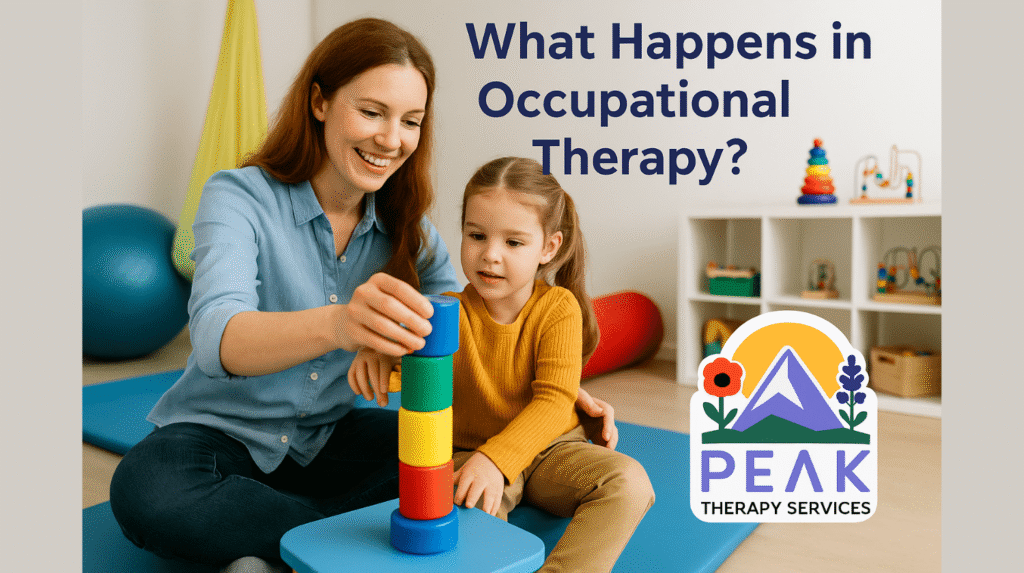
If your child struggles with loud sounds, clothing textures, movement, focus, transitions, or emotional regulation, sensory processing therapy may help. Many children experience sensory challenges that affect everyday life at home, school, and in social settings.
Sensory processing therapy helps children better understand, organize, and respond to sensory input so they can feel calmer, more confident, and more successful each day.
At Peak Therapy Services, we provide individualized pediatric therapy services designed to support each child’s unique strengths and needs.
What Is Sensory Processing Therapy?
Sensory processing therapy is commonly provided by a pediatric occupational therapist. It helps children who have difficulty processing sensory information from their environment and body, including:
- Touch
- Sound
- Sight
- Movement
- Balance
- Smell
- Taste
- Body awareness
Some children are highly sensitive to sensory input, while others seek movement, pressure, or constant stimulation. Therapy helps children develop better regulation and functional skills.
Signs Your Child May Benefit From Sensory Processing Therapy
A child may benefit from therapy if they often:
- Cover ears during common sounds
- Avoid certain clothing textures
- Become overwhelmed in stores or crowds
- Constantly jump, spin, or crash into things
- Struggle sitting still
- Have frequent meltdowns
- Resist transitions
- Seem clumsy or uncoordinated
- Have food texture aversions
- Struggle with focus or attention
These signs may indicate sensory processing challenges.
How Sensory Processing Therapy Helps
Therapy sessions use engaging, play-based activities that help children improve:
- Self-regulation
- Focus and attention
- Emotional coping skills
- Fine motor skills
- Gross motor coordination
- Balance and body awareness
- Tolerance to sounds and textures
- Confidence in new environments
Children learn best through movement and play, making therapy both effective and enjoyable.
Sensory Processing Therapy and Occupational Therapy
Pediatric occupational therapists are trained to evaluate sensory needs and build personalized treatment plans that support success in daily routines.
Therapy may help improve:
- Morning routines
- School readiness
- Handwriting
- Classroom participation
- Social interaction
- Feeding skills
- Sleep routines
- Independent play
Benefits of Early Support
Addressing sensory concerns early can reduce frustration and help children build stronger long-term skills. Early intervention may improve:
- Emotional regulation
- Family routines
- School performance
- Social confidence
- Independence
- Behavior challenges related to sensory overload
The earlier support begins, the more opportunities children have to thrive.
Sensory Processing Therapy in Lodi and Surrounding Areas
Families searching for sensory support often prefer therapy close to home for convenience and consistency.
Peak Therapy Services proudly supports children and families in:
- Lodi
- Stockton
- Galt
- Elk Grove
- Manteca
- Acampo
What to Expect During an Evaluation
An initial evaluation may include:
- Parent interview
- Developmental history review
- Observation of movement and regulation
- Functional skill assessment
- Personalized recommendations
Every treatment plan is tailored to the child’s goals and needs.