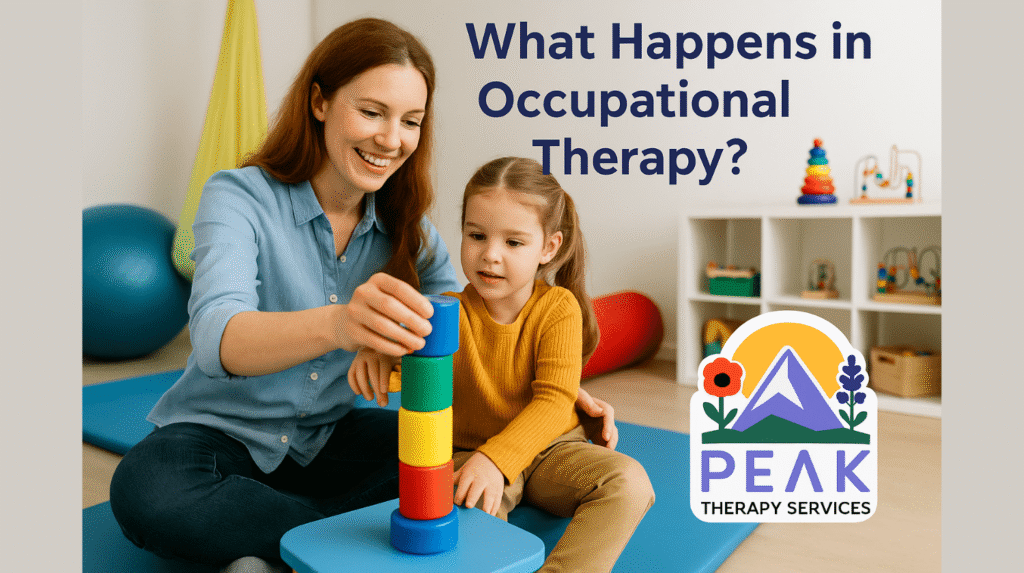
Building Skills for Focus, Regulation, and Everyday Success
Receiving an ADHD diagnosis for your child can feel overwhelming. Many parents wonder where to start, what support looks like, and how to best help their child thrive at home, school, and in everyday life. Occupational therapy (OT) is one of the most effective and supportive services for children with ADHD—especially when therapy focuses on practical, functional skills that matter most to families.
At Peak Therapy Clinic, we believe every child’s journey is unique. Occupational therapy is designed to meet children where they are and help them build the skills they need to succeed with confidence.

What Is ADHD and How Can Occupational Therapy Help?
Attention-Deficit/Hyperactivity Disorder (ADHD) affects more than attention alone. Children with ADHD may experience challenges with:
Executive functioning (planning, organizing, completing tasks)
Emotional regulation
Impulse control
Transitions and routines
Sensory processing
Self-regulation and coping skills
Occupational therapy addresses these challenges through individualized, evidence-based strategies that support children in real-life settings.
Key Areas Occupational Therapy Focuses On for Children With ADHD
1. Executive Functioning Skills
Occupational therapists help children develop skills for:
Organizing school materials
Planning and completing tasks
Managing time and transitions
Following multi-step directions
These skills are essential for academic success and daily independence.
2. Emotional and Self-Regulation
Many children with ADHD struggle to manage big emotions. OT helps children:
Recognize emotions
Learn calming strategies
Improve frustration tolerance
Develop coping tools for stress and overwhelm
These skills support emotional well-being and positive social interactions.
3. Impulse Control and Attention
Through structured activities and movement-based strategies, occupational therapy helps children improve:
Body awareness
Attention to tasks
Impulse control
Ability to pause and think before acting
Therapy sessions are engaging and tailored to each child’s interests and needs.
4. Sensory Processing Support
Some children with ADHD are over- or under-responsive to sensory input. Occupational therapists assess sensory needs and provide strategies to help children feel regulated and focused throughout the day.
Why In-Home Occupational Therapy Can Be So Effective
In-home occupational therapy allows therapists to work directly within a child’s natural environment. This means:
Skills are practiced where they are actually used
Parents can actively participate in sessions
Strategies are customized to daily routines
Children often feel more comfortable and engaged
Peak Therapy Clinic will begin offering in-home pediatric occupational therapy services starting Summer 2026, allowing families to receive support in a familiar and meaningful setting.
Our Approach at Peak Therapy Clinic
At Peak Therapy Clinic, our approach is:
Child-centered – therapy is built around your child’s strengths
Family-focused – parents are partners in the therapy process
Functional – skills are meaningful and practical
Compassionate – we support the whole child, not just a diagnosis
Our goal is to help children build confidence, independence, and skills that support long-term success.